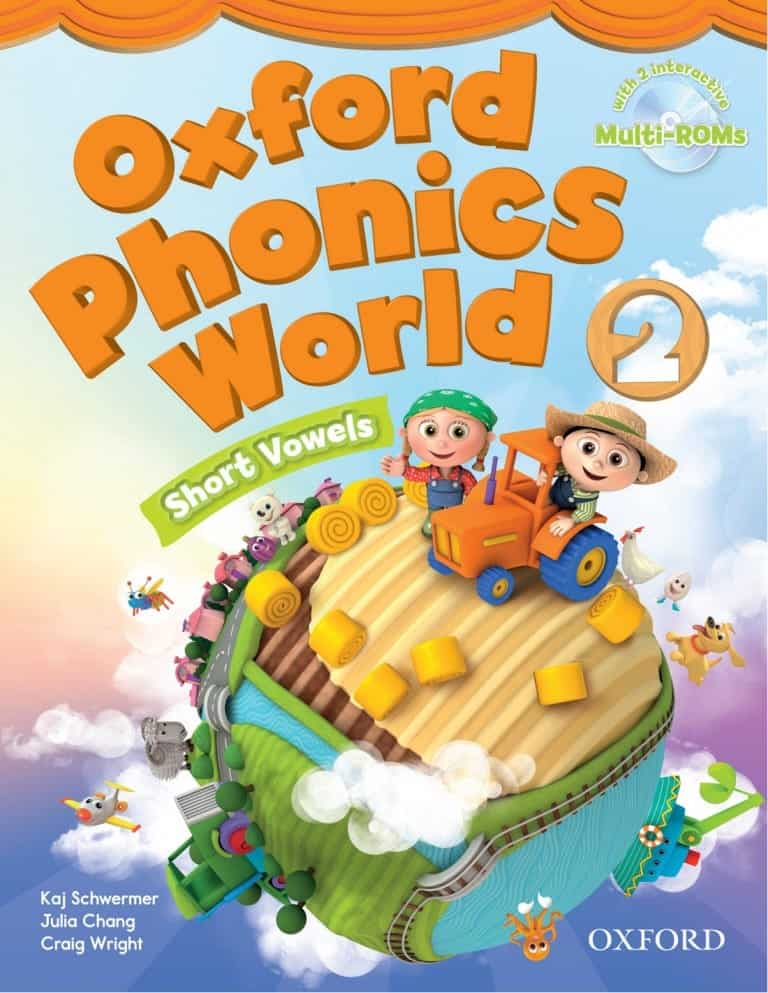
About This Book
Oxford Phonics World Student’s Book 2 is the second student’s book of the Oxford Phonics World course. The destination page is headed with this post’s exact title, and the file it serves, ‘Oxford Phonics World 2 Student Book.pdf’, carries the same course and level — the same volume under the filename the site serves it by. The book’s work is the widening: the first book’s sound map extended sound by sound, with blends lengthening and words beginning to arrive in the families that make English print feel patterned rather than random.
Pattern is the second book’s gift. A beginner who has only single mappings sees words as individual locks; a learner whose map has widened starts seeing families — the shared endings, the recurring chunks — and reading changes character from picking locks to recognizing neighbourhoods. That recognition is where speed is honestly born: not from hurrying, but from seeing more per glance. The expansion’s pacing is the professional secret the series guards — new sounds introduced at the rate of ownership, each one practised inside words the child can already almost read, so novelty always travels with company. Teachers feel Book 2 as the term when the class’s reading stops sounding like one letter at a time; parents feel it as the bedtime book’s lines arriving whole. Both are hearing the same event: the map becoming a world the child can actually travel in, rather than a chart they recite. The chart, by then, has become a country.
What Learners Will Practise
Widening the Sound Map
Learners practise the next sounds in sequence, each owned before the next arrives. Ownership before novelty is the series’ pacing covenant, and it is what makes expansion safe.
Longer Blends
The book practises pushing more sounds together without dropping any on the way. Blend length is working memory in training, and it grows by exactly this exercise.
Seeing Word Families
Readers practise noticing shared chunks across words — endings and patterns that repeat. Family recognition is the honest origin of reading speed.
Key Features
The ownership-paced expansion is the feature: the map widens at the speed of mastery. The family vision is the second — pattern over individual locks — and the shelf fit the third, the widened map beside this list’s first and third books. On this shelf it widens the map here.
Who This Book Is For
Young decoders with the first book’s sounds secure are its first audience. Teachers form its second readership, widening the map. Parents make its third, hearing whole lines arrive.
How to Use This Book
Guard the pacing covenant: never let enthusiasm skip a sound’s ownership. Point out families everywhere — shop signs, cereal boxes; the world is full of the book’s patterns. Revisit Book 1’s sounds inside Book 2’s words often; old sounds in new company is consolidation.
Related Books
The first book stands at Oxford Phonics World Student’s Book 1, and the third at Oxford Phonics World Student’s Book 3.